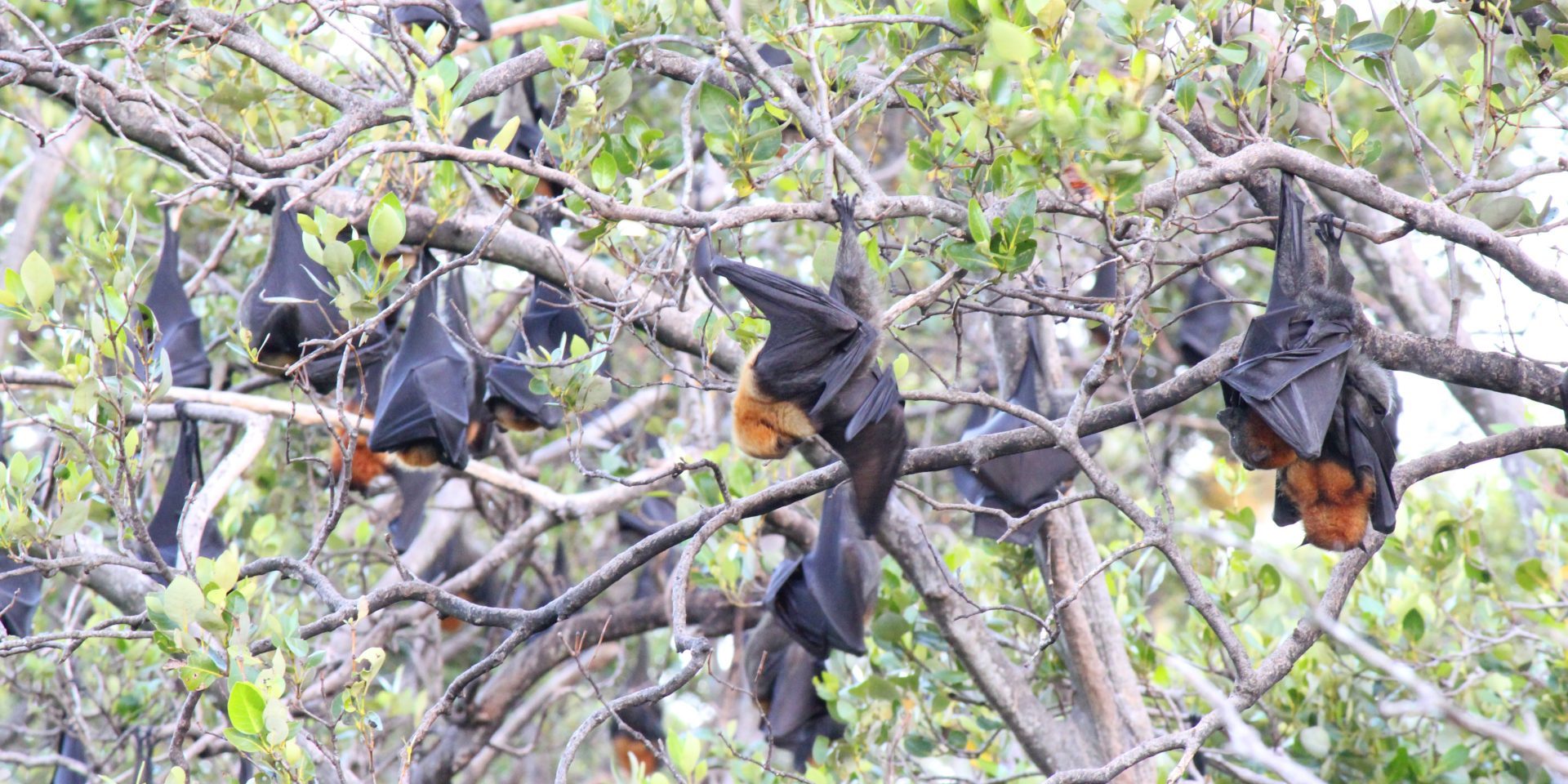
On International Bat Appreciation Day, the wildlife conservation organisation Wild Africa has called on the Nigerian government, the private sector, and conservation organizations to increase their support for the protection of Nigeria’s threatened bat species.
Studies found that there are 100 bat species in Nigeria, which is one-third of Africa’s bat diversity. Many of these species are at risk of extinction though, with IUCN 2025 conservation statuses ranging from near-threatened to critically endangered. This includes the short-tailed roundleaf bat, one of our planet’s most endangered bats.

Many Nigerians consider bats to be pests or symbols of bad luck. They are often hunted and killed out of fear, however, their greatest threats stem from habitat loss (deforestation, mining, commercial logging, and agricultural expansion), light pollution, and the bushmeat trade. In Nigeria, where bat hunting remains legal, fruit bats are widely consumed as a source of protein. Nigeria’s straw-colored fruit bat is arguably Africa’s most hunted bat species. This unsustainable hunting pressure not only endangers the survival of these species but also raises significant public health risks, as bats are known carriers of zoonotic viruses that can be transmitted to humans when consumed.
Bats also play a crucial yet often overlooked role in maintaining healthy ecosystems. They provide essential ecosystem services, including natural pest control and pollination. Insect-eating bats consume vast quantities of crop-damaging pests. Studies show that on Cameroonian cocoa farms, bats and birds can save farmers an average of $478 per hectare per year through pest consumption when shade tree cover is provided. Meanwhile, fruit bats are vital pollinators and seed dispersers, supporting the reproduction of numerous wild and cultivated plants such as mangoes, bananas, guavas, and baobab trees.
Wild Africa is using a combination of radio, TV, billboards, newspaper publications, and public service announcements (PSAs) featuring influential Nigerian ambassadors such as 2Baba, Nela Duke Ekpenyong, Josh2Funny, and other influential spokespeople to highlight Nigeria’s conservation needs for both wildlife and wild spaces.
On International Bat Appreciation Day, Wild Africa urges the Nigerian public to support the new Nigerian Law that will improve the wellbeing of Nigeria’s biodiversity.
FUN FACTS ABOUT BATS:
- There are over 1,400 species of bats worldwide, found almost everywhere except extreme deserts and polar regions.
- Bats vary greatly in size. The Kitti’s hog-nosed bat, also known as the bumblebee bat, is the smallest bat species and is roughly the size of a small coin. At the other end of the scale, flying fox bats can have a wingspan of up to 1.8 metres.
- Bats are the only mammals capable of flying. While the flying squirrel actually just glides for short distances, bats are “true fliers”. This is thanks to their unique wing structure made of stretched skin over elongated finger bones.
- Despite myths, most bats have excellent eyesight, and some species can even see in ultraviolet light.
- A single insect-eating bat can consume up to 1,000 mosquitoes in just one hour!