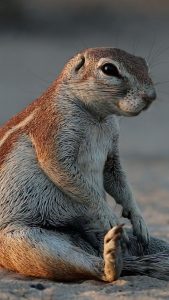
When you think of a squirrel, you might picture a cute, fluffy little animal darting through the trees in a regular suburban park. They are easy to overlook as just an “acrobatic rodent”. But across the vast landscapes of Africa, squirrels are far more interesting than that. They are intelligent, highly adaptable animals that play an essential role in maintaining healthy forests and savannas.
Did you know there are 11 distinct species of African bush squirrels, found from the lush jungles of the Congo to the dry stretches of South Africa? These small mammals are the unsung heroes of our ecosystems, quietly shaping the environments they call home.

Why African Bush Squirrels Are Known as “Nature’s Gardeners”
African bush squirrels might be small, but their impact on the environment is huge. These energetic rodents play an important role in seed dispersal and forest regeneration. As they prepare for winter or the dry seasons, squirrels bury thousands of seeds and nuts in the ground. Here’s the catch: they “forget” where they hide about 25% of their stash. Those forgotten seeds eventually germinate, sprouting and growing into the next generation of trees.
Their work does not stop there. While digging and foraging, squirrels naturally aerate the soil, helping it retain nutrients and absorb water more effectively. In drier landscapes, their burrows can even become shelter for other small animals like lizards and mice. In unexpected ways, their behaviours help keep ecosystems healthy and balanced.
The Challenges Facing African Bush Squirrels
Despite being master adaptors, African bush squirrels are facing increasing hurdles in the wild:
- Habitat loss caused by deforestation and agricultural expansion is shrinking the tree cover and foraging grounds squirrels rely on.
- Climate change is also playing a role. Shifts in rainfall and disrupted fruiting cycles make it harder for squirrels to find and store enough food during dry periods.
- Human wildlife conflict is another growing issue. When squirrels raid crops, enter homes, or chew through roofs and electrical wiring, they are often seen as pests. In some areas, this leads to trapping, poisoning, or killing.
- As towns and cities expand, squirrels are also more exposed to domestic predators like cats, road traffic, and other risks linked to human infrastructure.
Respect the Wild
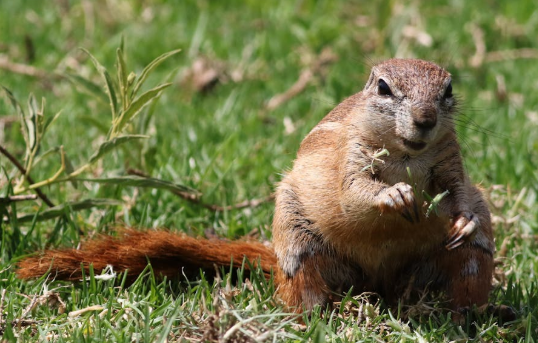
It is tempting to want a closer look, but the best way to love a squirrel is to give it space. Squirrels are wild animals, and feeding or interacting with them can do more harm than good. When squirrels begin to associate humans with food, they stop foraging naturally.
This change in behaviour has a ripple effect. As they adopt a new “begging” behavior, squirrels spend less time finding and burying seeds, resulting in forests losing one of their most effective natural planters. Over time, this can affect tree regeneration and the health of entire ecosystems.
So the next time you spot a flash of fur moving through the trees, take a moment to admire the hard-working gardener at work from a distance. By respecting their wild nature, we help ensure that African bush squirrels can continue playing their vital role in keeping ecosystems thriving.
Now, let’s take a look at these charismatic critters and where in they call home:
- Alexander’s bush squirrel: A small forest species that grows up to 100 mm in length, found in the Democratic Republic of the Congo and Uganda.
- Boehm’s bush squirrel: Known for their interesting nests built from vines, twigs, and leaves, this species is found across Burundi, the Democratic Republic of the Congo, Kenya, Rwanda, South Sudan, Tanzania, Uganda, and Zambia.
- Smith’s bush squirrel: A social species that bonds through grooming and shared common scents. The Boehm’s bush squirrel occurs in Angola, Namibia, the Democratic Republic of the Congo, Tanzania, Malawi, Botswana, Zimbabwe, Mozambique, and South Africa.
- Cooper’s mountain squirrel: Quite rare and elusive, there actually isn’t much known about this squirrel that calls Cameroon and Nigeria’s woodlands its home.
- Striped bush squirrel: This species is highly adaptable and for that reason they thrive in both forests and savannahs across Kenya, Malawi, Mozambique, and Tanzania.
- Black and red bush squirrel: Easily recognised by its bright red-orange fur. This critter lives in Malawi, Tanzania, and Zambia.
- Ochre bush squirrel: This squirrel prefers a dry savannah and can be located in Kenya, Somalia, and Tanzania.
- Red bush squirrel: This species opts to stay in subtropical or tropical dry forest in Somalia, Kenya, Tanzania, Malawi, Mozambique, Zimbabwe, and South Africa.
- Green bush squirrel: With olive-green to grey fur, this squirrel easily blends into the forests of Benin, Cameroon, the Republic of the Congo, the Democratic Republic of the Congo, Ivory Coast, Equatorial Guinea, Gabon, Ghana, Guinea, Liberia, Nigeria, and Sierra Leone.
- Swynnerton’s bush squirrel: This special squirrel is endemic to moist subtropical and tropical forests of Tanzania.
- Vincent’s bush squirrel: Named after an English ornithologist, they are endemic to the subtropical and tropical montane forests of Mozambique.
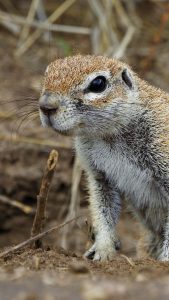
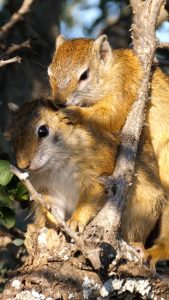
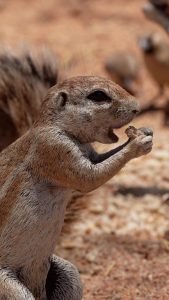
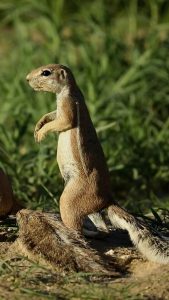
Take a moment to scroll through this gallery of African bush squirrels and let these busy, fluffy gardeners brighten your day: